
PayrollBy Sheafor Financial1 min read
The Small Business Payroll Checklist for Every Pay Run
A simple, repeatable checklist that helps service businesses run accurate payroll, stay compliant, and avoid costly penalties.
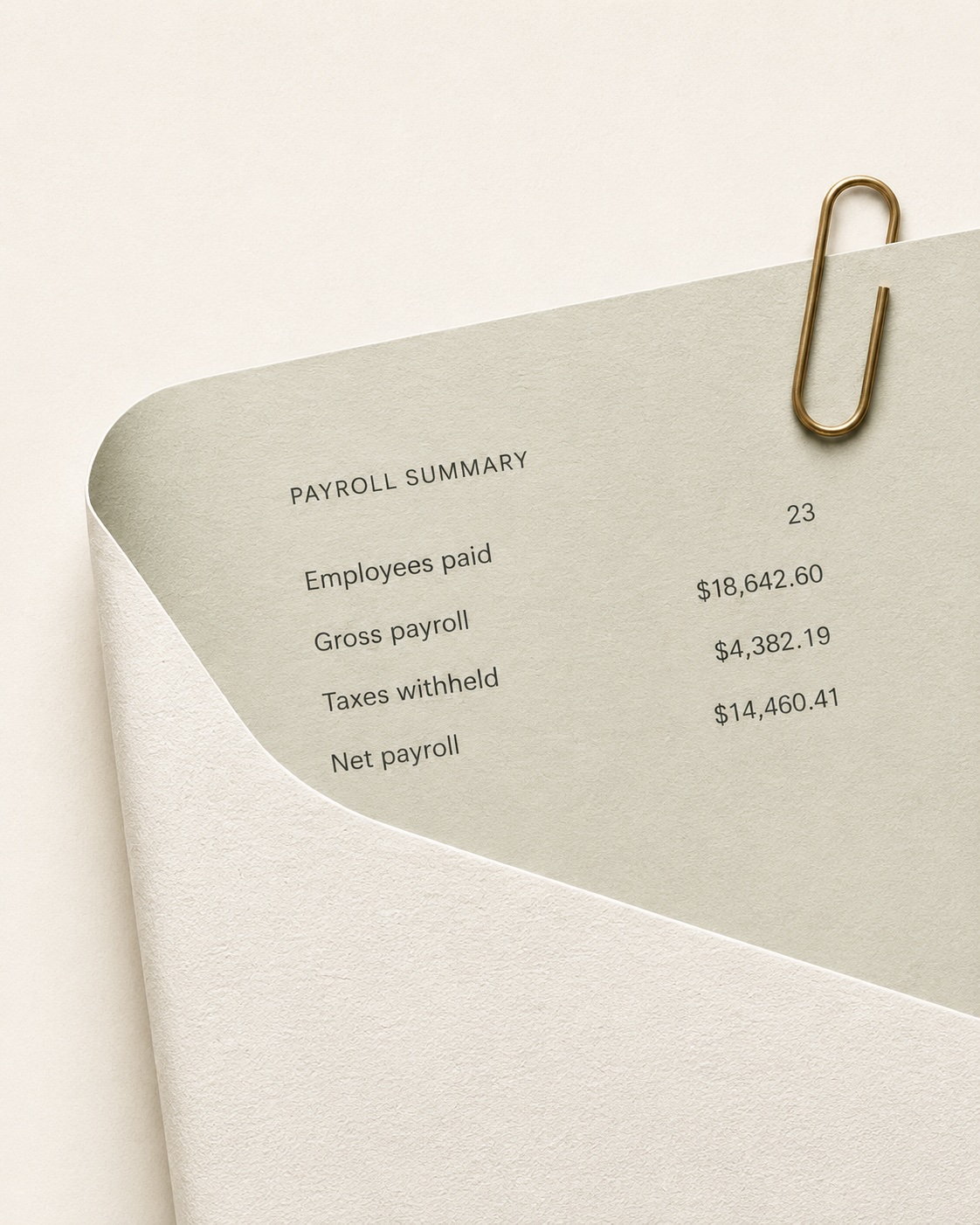
Payroll is the one bookkeeping task your team notices immediately when it goes wrong. A missed overtime hour or late tax deposit can damage trust and trigger penalties. A consistent checklist removes most of that risk.
Before each pay run
- Confirm hours and time off. Approve timesheets and PTO requests before the payroll cutoff, not after.
- Review changes. New hires, raises, address changes, and benefit elections should be entered before you preview payroll.
- Check classifications. Make sure employees and contractors are classified correctly. Contractors are paid outside of payroll and receive a 1099 instead of a W-2.
While running payroll
- Preview the payroll register and compare total gross pay to the previous period.
- Investigate any employee whose net pay moved more than you would expect.
- Verify deductions for benefits, retirement contributions, and garnishments.
- Confirm the funding account has enough cash to cover net pay and tax withholdings.
After payroll is approved
- Record the journal entry in your books, splitting wages, employer taxes, and liabilities into the right accounts.
- Make tax deposits on time. Federal deposit schedules depend on your payroll size, and states set their own rules.
- Save the payroll register for your records.
Quarterly and annual tasks
| When | Task |
|---|---|
| Quarterly | File Form 941 and state payroll returns |
| Annually | File Form 940 for federal unemployment |
| By January 31 | Send W-2s to employees and 1099-NEC forms to contractors |
Signs it is time to outsource
If payroll takes more than an hour each cycle, you operate in more than one state, or you have received a penalty notice, handing payroll to a specialist usually pays for itself. Learn more about how we handle payroll for service businesses.